
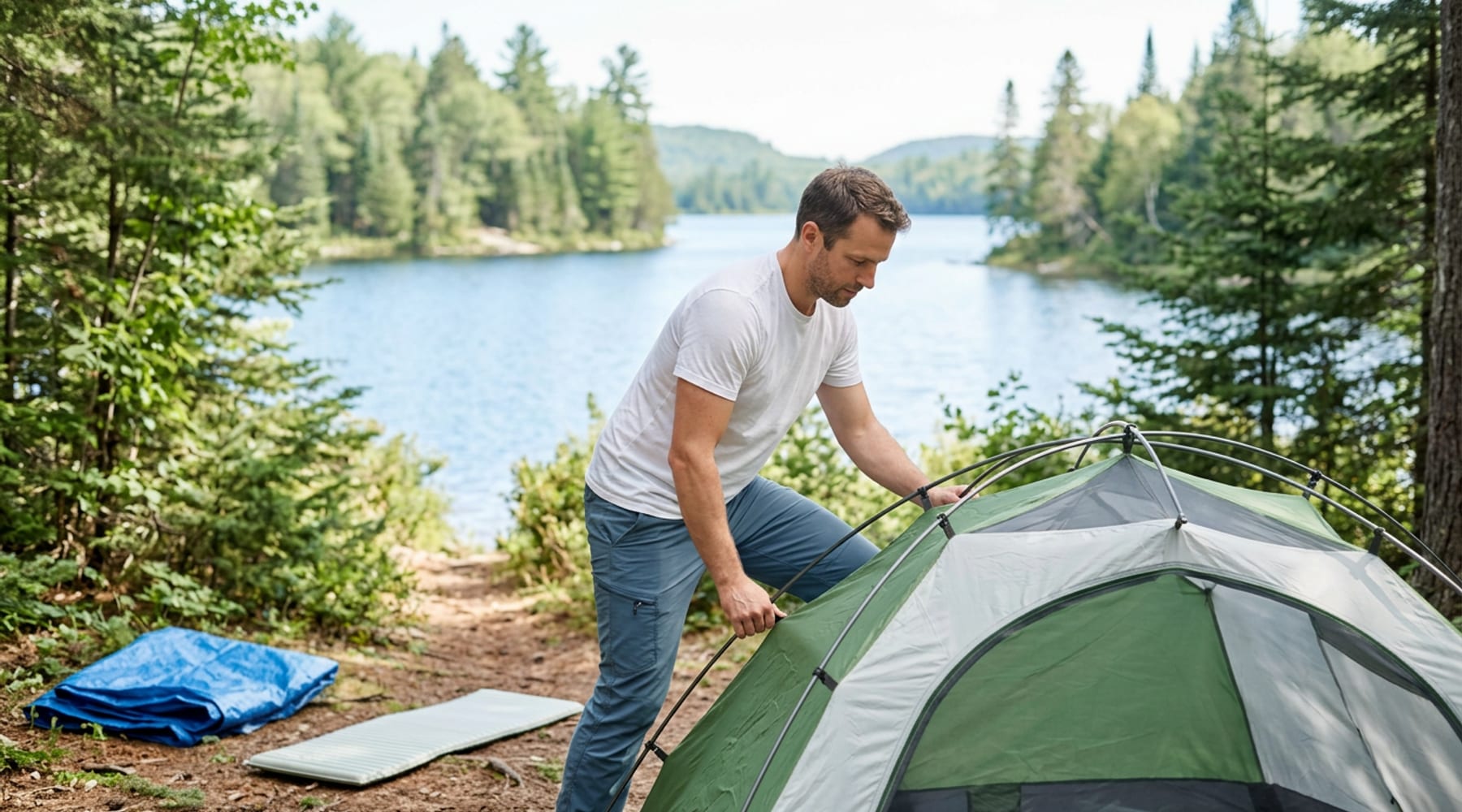
Camping is a cherished summer tradition for many families here in Gatineau. Whether you choose a tent for total immersion in nature or the comfort of a camper trailer, this getaway is a well-deserved break. However, our chiropractors at Chiro du Portage often notice that the change in routine and unusual physical exertion associated with this activity can put a lot of strain on your spine. The shift to an environment that’s less ergonomic than your home requires special attention to prevent discomfort.
The goal of this article is to offer you educational tips for protecting your back during three key stages: setting up camp, sleeping, and physical activities. We firmly believe that a preventive approach and a good understanding of biomechanics can minimize unnecessary strain. By adopting a few simple habits and listening to your body’s signals, you’ll give yourself the best chance of turning your trip into a refreshing experience rather than a string of muscular discomforts.
Setting Up Camp: A Challenge for the Lower Back
Setting up camp is often when the muscles in your lower back are worked the hardest. Between pitching the tent, unloading the car, and organizing the campsite, repetitive movements and prolonged postures pile up quickly. Lifting, twisting, and bending are all movements that, if not done carefully, can create tension.
Tips for Protecting Your Back While Setting Up
- Plan your movements: Before lifting a heavy object or a bulky structure, assess the weight. If possible, work with someone else to balance the load.
- The pivot rule: Avoid twisting your torso while carrying a weight, at all costs. If you need to move a bag or a cooler, move your feet to turn your whole body in the right direction.
- Use your legs: To pick up tent stakes or tools from the ground, bend your knees and keep your back straight. Avoid bending over in a “U” shape.
- Vary your tasks: If you’re setting up a family campsite, alternate between tasks done on the ground and those done standing to avoid localized muscle fatigue.
Restful Sleep: Adapting Your Sleeping Space
Sleep is the crucial time for recovery. Yet comfort while camping is often very different from that of your usual bed. A mattress that’s too soft—or, conversely, a surface that’s too firm and offers no support—can disrupt your spine’s natural alignment.
Optimizing Your Comfort at Night
If you’re sleeping in a tent, the challenge often lies in the density of the mattress. A thin sleeping mat can offer little cushioning, increasing pressure points. If you feel the need, make sure to choose an air mattress or foam pad that’s thick enough.
Think about your sleeping position too. Sleeping on your side is generally recommended to reduce pressure on your lower back. A small pillow or a rolled-up piece of clothing placed between your knees can help keep your pelvis aligned. If you prefer sleeping on your back, place a cushion under your knees to reduce lower-back arch and relax the associated muscles. Don’t forget to bring a pillow that properly supports your neck—a simple rolled-up sleeping bag is rarely enough to maintain your neck’s natural curve.
Physical Activities: Moving Without Pain
Walking, carrying outdoor gear, and recreational activities like biking or swimming are great for your health, as long as you approach them in moderation. A sudden increase in activity level, after a period of inactivity, is often the main cause of joint strain while camping.
Tips for Hikes and Outdoor Activities
- Light warm-up: Before heading out on the trails, take two minutes to do some gentle stretches or a slow walk to wake up your muscles and joints.
- Wearing your backpack: If you’re going hiking, adjust your backpack properly. The hip belt is essential—it transfers a large portion of the weight onto your hips rather than your shoulders and back.
- Listen to your body’s signals: If pain shows up, don’t push through it. Fatigue is often a sign that your stabilizing muscles have reached their limit. Take an active break, change your posture, or hydrate.
- Hydration: Your intervertebral discs, which act as shock absorbers for your spine, need proper hydration to maintain their flexibility and protective role.
Why a Preventive Approach Is Key
At Chiropratique du Portage, our approach is rooted in prevention and understanding biomechanics. Every body is unique. If you have a history of lower back or neck pain, it can be beneficial to talk to a chiropractor about your overall health before heading out on vacation. We can assess your posture and suggest tailored exercises so you can enjoy your camping trip without worry.
In chiropractic care, our goal is to support an environment where your neuromusculoskeletal system functions optimally. By improving joint mobility and reducing chronic muscle tension, we help our patients better handle the physical demands of daily life and outdoor activities.
Conclusion: Head Out with Peace of Mind
Camping remains an enriching activity for both body and mind. By being mindful of the ergonomic challenges specific to setting up camp, sleeping, and physical activities, you increase your chances of enjoying every moment. Remember: moderation, movement, and listening carefully to your body are your best allies. If any discomfort persists after your trip, don’t hesitate to contact us. Our team in Gatineau is here to support you, assess your situation professionally, and offer personalized follow-up care to help you feel comfortable and return to full mobility. Enjoy your next adventures under the stars!