

When talking about lower back pain or sciatica, people often think of compressed discs or nerves. However, there is another, less known yet common cause: piriformis syndrome.
Piriformis syndrome is a frequent cause of lower back pain, sciatica, leg numbness, and sometimes even chronic back pain. It is often misdiagnosed because its symptoms can be confused with those of a disc irritation or a pinched nerve in the lower back. However, when detected early, it generally responds very well to chiropractic care.
In this article, we will take a deep dive into what piriformis syndrome is, its causes, distinctive signs, and especially how chiropractic care can offer an effective and lasting solution.
What is Piriformis Syndrome?
Piriformis syndrome is a muscular condition affecting a small pear-shaped muscle located deep in the gluteal region: the piriformis.
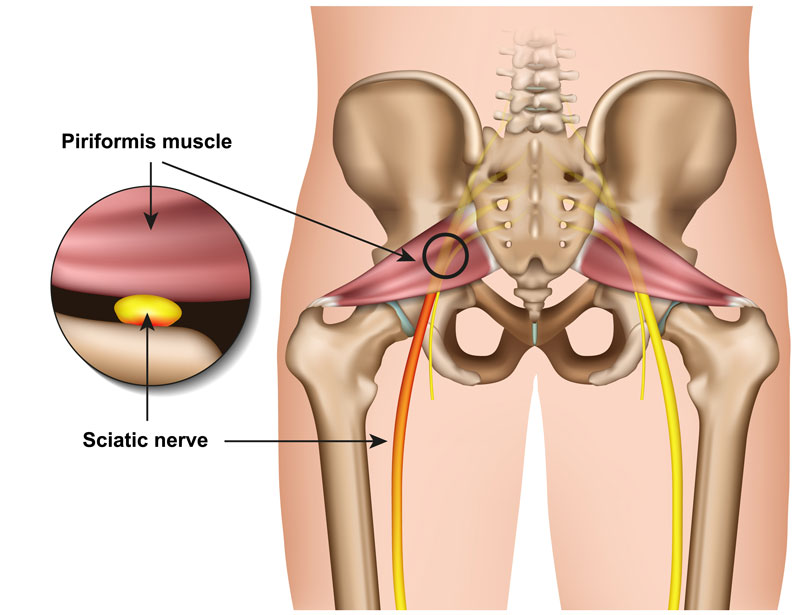
This muscle plays a crucial role in the external rotation and stabilization of the hip. Situated nearby is the sciatic nerve, which passes just beneath the piriformis…and in about 10% of people, this nerve even runs through the muscle.
hen the piriformis becomes too tight, spasmodic, inflamed, or compressed due to an unbalanced posture, it exerts pressure on the sciatic nerve. This compression results in characteristic symptoms:
- Pain in the buttock
- Radiation down the back of the thigh
- Numbness or tingling
- Burning sensation
- And sometimes weakness in the leg
Although these signs may suggest a herniated disc, this is not always the case. The piriformis can mimic all symptoms of sciatica without any issues in the lumbar spine. A vertebral misalignment/subluxation, a shorter leg, or pelvic rotation can alter biomechanics and overload the piriformis.
Who is Most Affected by Piriformis Syndrome?
Piriformis syndrome can affect various people, but certain groups are more likely to suffer from it.
Here are the most at-risk populations:
- Sedentary Individuals: Those who spend long hours sitting at a desk or have limited physical activity are more prone to developing tension in the piriformis muscle, which can lead to pain.
- Athletes and Sportspersons: Individuals who engage in sports that heavily involve the hips, such as running, cycling, or weightlifting, may develop overload on the piriformis muscle, especially if their technique or mobility is not optimal.
- Individuals with Muscle Imbalances: Those with imbalances in the strength of the hip or trunk muscles, such as weak glutes or tight hamstrings, are also more vulnerable to the syndrome.
- Individuals Who Have Experienced Injuries or Trauma: Injuries to the buttock region, excessive stress on the hips, or falls can trigger piriformis syndrome in some individuals.
- Pregnant Women: Due to hormonal changes and postural adjustments occurring during pregnancy, women may be more susceptible to developing tension in the piriformis.
Why Does Piriformis Syndrome Develop?
The causes of piriformis syndrome are varied, but the most common include:
- Prolonged Sitting: Working at a desk, driving for long periods, or sitting without good support leads to shortening of the muscle and increases tension on the sciatic nerve.
- Injury or Fall on the Buttock: A slip or impact from a fall can trigger a spasm of the piriformis.
- Muscle Imbalance: Stiff hips, weak glutes, or overused hamstrings force the piriformis to work too hard.
- Intense Workouts: Any activity that heavily engages the hips increases the risk of piriformis overload.
- Lumbar Spine or Pelvic Dysfunction: A vertebral misalignment, pelvic rotation, or pelvic tilt can also overload the piriformis

Typical Symptoms to Watch For
Here are the signs that may indicate piriformis syndrome:
- Pain in the buttock: often localized to a specific point.
- Pain radiating down the leg: resembling false sciatica.
- Pain worsened when sitting.
- Difficulty crossing legs.
- Numbness or tingling extending down to the foot.
- Lower back pain or stiffness in the lower back.
- Sensation of a pinched nerve in the hip.
- Irritation while walking or climbing stairs.
- Burning sensation: in the buttock region or down the leg.
- Difficulty sitting or standing: a movement that may exacerbate the pain.
- Discomfort during physical activity: particularly in activities that engage the hips, such as running or cycling.
Some individuals also report tension in the upper back or neck as the body changes its posture to compensate for the pain.
How to Know if Your Pain Comes from the Piriformis?
It is not always easy to distinguish piriformis syndrome from sciatica or a lumbar problem, as the symptoms can be similar. That’s why a chiropractor should carefully examine you before starting treatment to identify the cause of the problem for effective treatment.
During the examination, the chiropractor will ask questions to identify key indicators, such as:
- Pain in the buttock
- Worsening while sitting
- Pain radiating down the leg, etc.
They will also perform a physical examination to try to reproduce the pain and better identify the issue. In some cases, the chiropractor may recommend an X-ray to rule out other conditions like arthritis or a herniated disc.
Can You Prevent Piriformis Syndrome?
The answer is: Yes!
Here are the best tips to prevent piriformis syndrome:
- Consult Chiropractic Care Preventively: Even before pain occurs, a consultation is a good way to prevent this symptom. It ensures there are no muscle compensations and that the alignment of the pelvis and spine is adequate.
- Move Regularly: Avoid sitting for more than 45 to 60 minutes.
- Strengthen the Glutes: They should do the work, not the piriformis!
- Stretch After Exercise: Especially after activities like running or other sports.
- Adopt Good Posture: Well-aligned pelvis reduces pressure on the muscle.
In summary, prevention relies on movement and muscle balance. An active body, well-strengthened muscles, and proper posture significantly reduce the risk of piriformis overload. These simple habits can make all the difference in avoiding pain and preserving your mobility in daily life.
To Remember
Piriformis syndrome may seem trivial, but it can seriously impact quality of life, leading to difficulties in walking, pain while driving, and constant discomfort while sitting. The good news is that it treats very well.
It is crucial to adopt a holistic approach since piriformis syndrome is often related to imbalances in posture, mobility, and muscle strength. To relieve pain and prevent recurrences, it is essential to address multiple aspects. An effective intervention aims to reduce tension on the sciatic nerve, improve hip mobility, and correct compensations that maintain the problem.
This approach may include chiropractic care, adjustments, targeted muscle work, tailored exercises, and ergonomic advice. By combining these elements, you not only alleviate the symptoms but also correct the cause and promote lasting recovery.
If you suffer from sciatica, lower back pain, or discomfort radiating down the leg, it’s possible that the piriformis is involved. Don’t wait: an evaluation by an expert can make all the difference.
Dr Patrick Gaudreau, chiropractor
Dr Émilie Gaudreau, chiropractor
Sources consulted on December 13, 2025:
- fr. (2025). Syndrome du muscle piriforme : guide complet 2025 – symptômes, diagnostic, traitements. Récupéré de https://lemedecin.fr/medical/pathologies/syndrome-du-muscle-piriforme.html
- Physio Learning. (2025). Le syndrome du piriforme (fausse sciatique) : mise à jour 2025. Récupéré de https://physio-learning.com/ressources/le-syndrome-du-piriforme-fausse-sciatique/