

The spine is not only related to the back, posture, or lower‑back pain. It plays a central role in communication between the brain and the rest of the body. Every movement, every sensation, and many bodily functions depend on this connection.
When the spine is functioning well, nerve signals travel properly. This directly contributes to overall well‑being. Conversely, when it is restricted, this communication can be disrupted, which can affect overall health.
Understanding the link between the spine and the nervous system helps explain why it’s important to take care of it. A healthy spine is essential for maintaining the body’s balance and proper functioning.
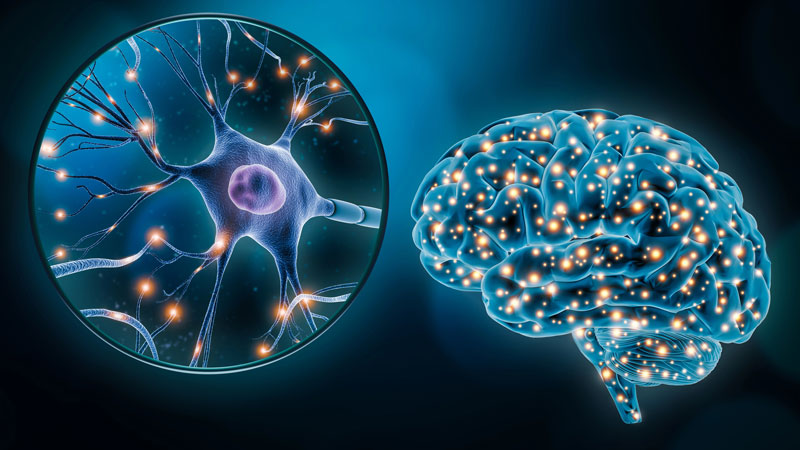
The nervous system: the body’s control center
The human body relies on a very complex system to function properly: the nervous system. This system forms a vast communication network that links the brain to all parts of the body, such as muscles, organs, and tissues.
At the center of this network are two essential elements: the brain and the spinal cord. The spinal cord is protected by the spine, which plays a key role in transmitting nerve signals. Together these structures allow the body to coordinate movements, perceive sensations, and maintain vital functions.
The spinal cord is a long bundle of nerves that originates in the brain and runs down inside the spine. From this central structure, millions of nerves branch out to different areas of the body.
This nerve network continuously transmits the messages needed to move, sense pain, maintain balance, and coordinate vital functions.
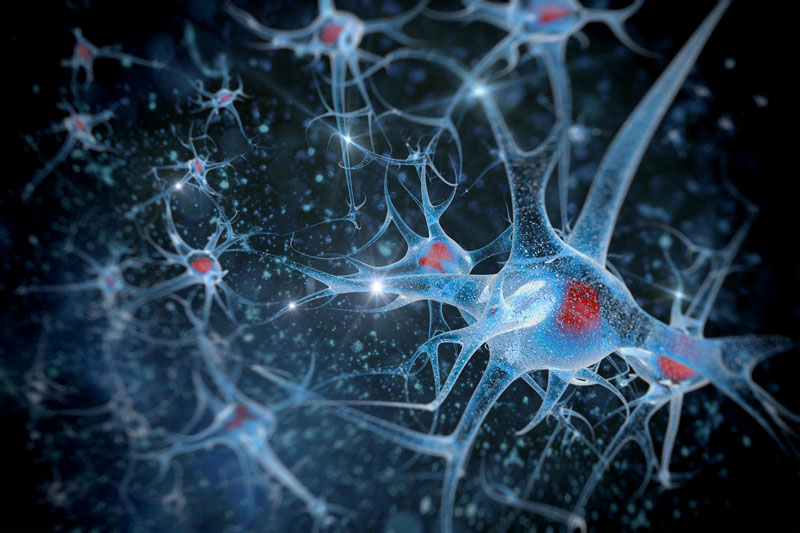
When a nerve becomes irritated or compressed — which can happen with back pain, muscle tension, reduced mobility, or sciatica — this communication can be disrupted. In our chiropractic terminology, this is called a subluxation.
Thanks to the precision of this sophisticated system, the brain can control our movements, perceive sensations, adjust posture, and coordinate organ function.
Every second, an impressive amount of information flows between the brain and the rest of the body, ensuring communication essential to overall health, well‑being, and the body’s ability to adapt to everyday stresses.
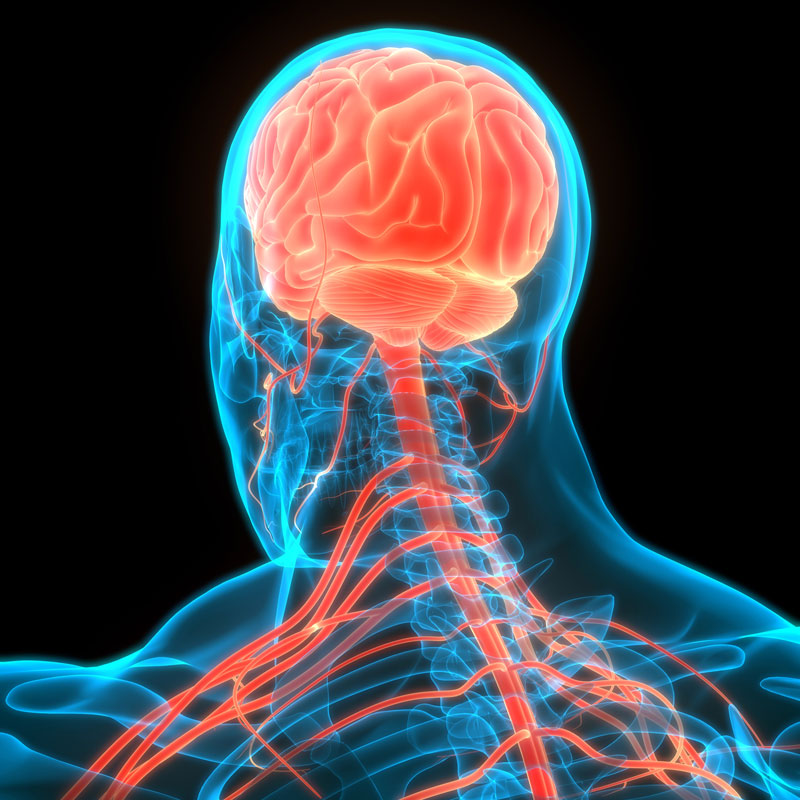
How the brain and body communicate
Central and peripheral nervous systems
Communication relies on two complementary systems:
- Central nervous system (CNS): brain and spinal cord
- Peripheral nervous system (PNS): spinal and peripheral nerves that connect the CNS to muscles, organs, and tissues
From the brain to the body (efferent pathways)
Efferent pathways originate in the brain and spinal cord to transmit motor and visceral commands to muscles and organs via the PNS. These signals control movement, posture, breathing, and other automatic functions. If transmission is impaired (tension, joint restriction, nerve irritation), commands can be altered, causing stiffness, weakness, or postural imbalance.
From the body to the brain (afferent pathways)
Afferent pathways carry sensory input from receptors to the brain via the spinal cord. They transmit pain, pressure, temperature, and body position, allowing the CNS to adjust motor responses and pain perception in real time. Disruption of these signals (poor posture or repeated mechanical stress) alters sensory integration and how the body responds.
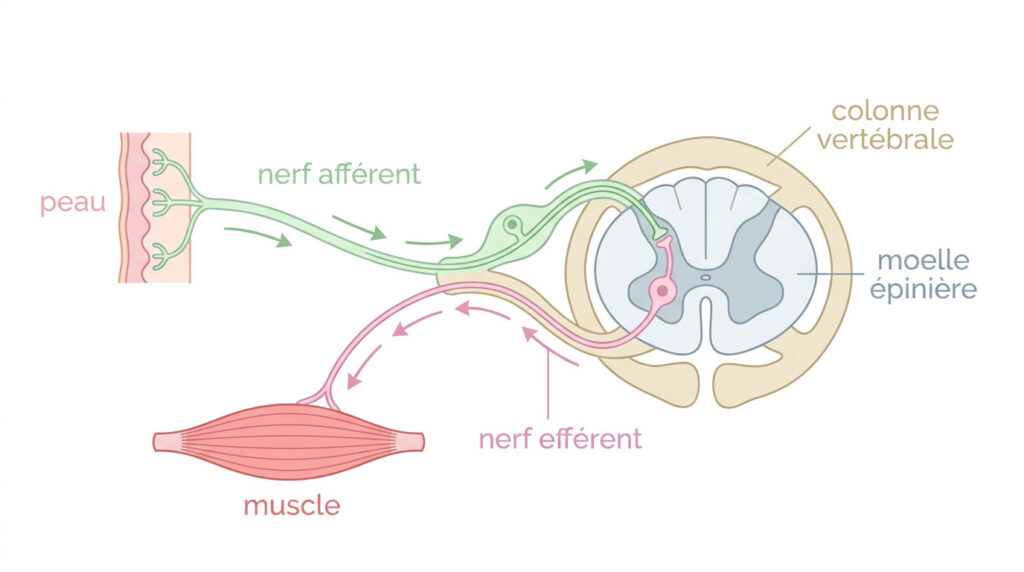
In short, the CNS and PNS work in a loop: efferents command action, afferents inform and adjust. Preserving spinal mobility and health facilitates this essential communication.
The spine: essential protection
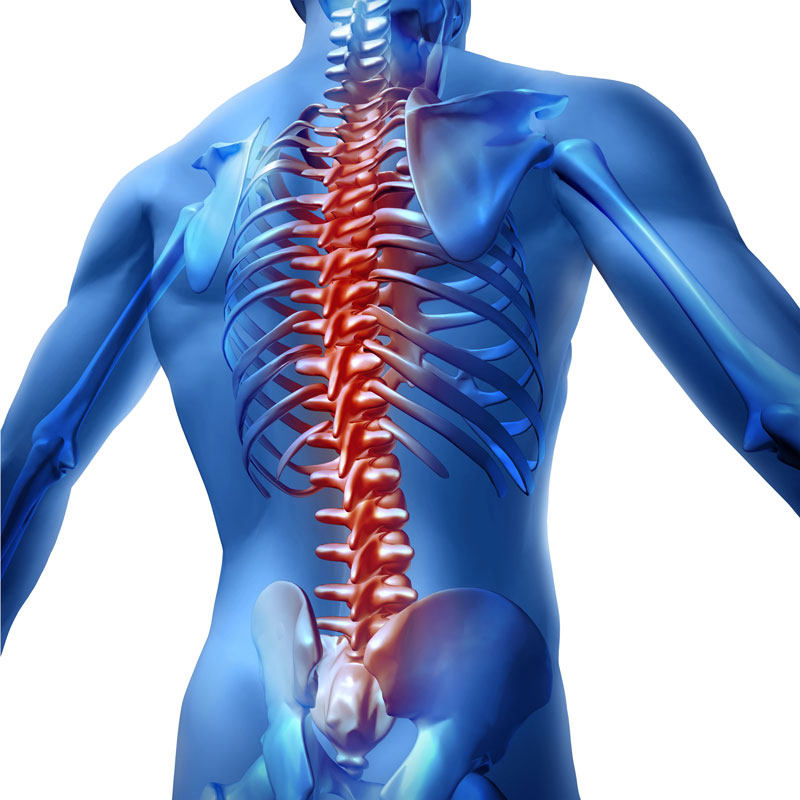
The spine plays a vital role in the human body. It supports body weight, enables movements like bending, twisting, and walking, and protects the spinal cord. The spinal cord is a central structure of the nervous system and is often involved in issues such as back pain, neck pain, or lower‑back pain.
The spine is made up of 24 movable vertebrae, plus the fused vertebrae of the sacrum and coccyx. Between each vertebra are intervertebral discs. These discs act as natural shock absorbers: they absorb impact, reduce friction, and facilitate movement. Their role contributes to smooth mobility and can help prevent discomforts such as muscle tension, back stiffness, or sciatica‑related pain.
Thanks to the arrangement of its vertebrae and discs, the spine forms a protective canal through which the spinal cord runs. You can imagine this structure as a flexible armor, designed to protect one of the body’s most essential components while allowing the freedom of movement necessary for posture, balance, and overall well‑being.
When the body’s mechanics are disrupted
Everyday life places many physical demands on the body, and several common habits can repeatedly stress the spine. Among the most frequent factors are:
- Long hours of sitting
- Phone use
- Repetitive movements
- Work postures
Over time, the accumulation of these stresses can alter the mobility of the spine’s joints. When these joints move less freely, this can lead to various discomforts, including:
- Muscle tension
- Reduced mobility
- Discomfort in different areas of the body
- Morning stiffness
- A feeling of irritated or pinched nerves
- Posture‑related headaches
- Faster muscle fatigue
- Increased sensitivity in the back or neck
- Radiating pain, such as that associated with the sciatic nerve
Each person reacts differently to these stresses, and symptoms can vary depending on age, lifestyle, or the body’s ability to adapt.

The chiropractic approach
Chiropractic pays particular attention to the relationship between the spine, the nervous system, and the body’s overall function. During a consultation, the chiropractor assesses elements such as posture, spinal mobility, muscle tension, and lifestyle habits that can influence body mechanics.
Chiropractic adjustments aim to improve the movement of the spine’s joints. By promoting better mobility, they help restore joint and muscle balance, thereby supporting the body’s optimal function and its ability to adapt to daily demands.
The importance of prevention
Much of chiropractic care is based on prevention. Rather than waiting for pain to become severe, many people seek care to maintain good spinal mobility, reduce accumulated tension, improve posture, and support general well‑being—especially when they notice early signs such as stiffness, the start of back pain, or unusual muscle fatigue.
In a world where the body is constantly exposed to many physical stresses, caring for the spine helps preserve bodily balance, reduce the risk of lower‑back or neck pain, and support optimal nervous system function.
An essential relationship for your health
The relationship between the brain and the spine is essential to the functioning of the human body. Together they form a communication system that allows the body to move, react, and adapt. This connection directly influences posture, mobility, pain management, and overall well‑being.
Caring for your spine also means preserving a structure that protects and supports the nervous system, one of the most important elements of our health. Every movement, every sensation, and every postural adjustment depends on this intimate relationship between the brain and the spine.
When the body sends signals such as tension, stiffness, or discomfort, it may indicate that this communication is disrupted. These signals remind us of the importance of maintaining a healthy spine to support proper nervous system function and overall well‑being.
Dr. Émilie Gaudreau, Chiropractor
Dr. Patrick Gaudreau, Chiropractor
Sources consulted on 03/19/2025:
Association des Chiropraticiens du Québec. (s.d.). Qu’est-ce que la chiropratique ? https://www.chiropratique.com/fr/chiropratique/qu-est-ce-que-la-chiropratique.html
Société canadienne du cancer. (2020). Anatomie et physiologie du système nerveux. https://cancer.ca/fr/cancer-information/cancer-types/neuroblastoma/what-is-neuroblastoma/the-nervous-system
Public Health Agency of Canada. (2024). Neurological conditions. https://www.canada.ca/en/public-health/services/chronic-diseases/neurological-conditions.html
Université McGill. (s.d.). Colonne vertébrale (voir aussi Moelle épinière). https://www.mcgill.ca/infoneuro/fr/ressources-en-ligne/sujets-medicaux/colonne-vertebrale-voir-aussi-moelle-epiniere