
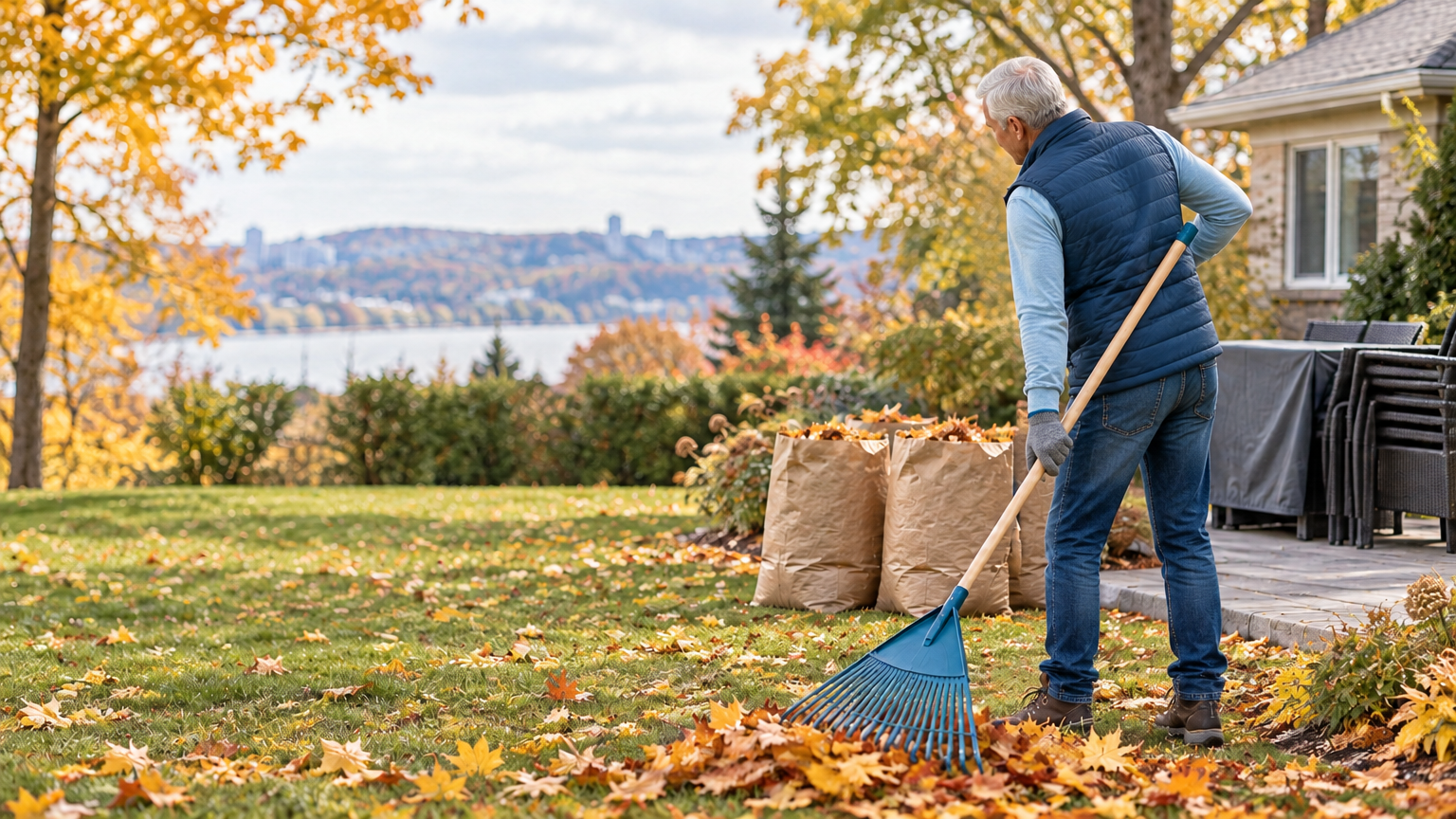
Fall brings its share of outdoor chores and activities. Raking leaves, tidying the yard, putting away patio furniture, moving planters or getting the house ready for winter can mean several hours of physical effort. It is also an ideal season for walking in the woods, running, cycling or enjoying the region’s colourful trails.
These activities get you moving, but they also involve repetitive movements, twisting, sometimes bulky loads, and wet or slippery surfaces. Cold weather can make you feel stiffer, while suddenly returning to an unfamiliar activity can put demands on muscles and joints that are less prepared. A few simple precautions can help you pace yourself and make the most of the season.
Why can fall activities be demanding?
Fall chores often involve several physical demands in a single day. Raking requires repeated movements. Moving furniture and planters involves loads that are heavy or hard to grip. Yard work sometimes means bending over, squatting or twisting. Add to this the cold, wind, dampness and wet leaves that can affect your footing.
Seasonal sports come with their own challenges. An uneven trail places greater demands on your ankles, knees and balance than a flat surface. A longer-than-usual run or bike ride can quickly increase fatigue. The risk of overexertion is especially high when you try to finish everything in one day or return to your previous activity level after a less active period.
Start with a gradual warm-up
Before tackling a chore or heading out for exercise, take five to ten minutes to gradually raise your body temperature. The goal is not to force stretches, but to prepare your joints and muscles for the movements ahead.
- March in place or walk slowly for a few minutes.
- Gently move your shoulders, wrists, hips and ankles through a comfortable range of motion.
- Do a few shallow knee bends, holding on to a stable support if needed.
- Practise the movements you will be doing without a load, such as gently pulling a rake or bending at the hips before lifting an object.
In cool weather, start more slowly than you would in summer. Feeling stiff at first does not necessarily mean an injury is getting worse, but it is a reason to build up patiently and avoid sudden movements.
Rake leaves without repeated twisting
Raking works your shoulders, arms, upper back and lower back. Repeating the same movement, especially when your feet stay planted while your torso turns, can lead to fatigue or discomfort.
- Move your feet along with the rake rather than twisting only at the waist.
- Switch hand positions regularly to distribute the effort between both sides.
- Work in small sections and gather leaves with short strokes.
- Avoid overfilling bags, especially when leaves are wet and heavier.
- Use a groundsheet or tarp to move a large volume of leaves without repeated lifting.
A short break before you become very tired is generally more helpful than a long rest once you are exhausted.
To see these techniques in action, watch the video in which Dr. Patrick Gaudreau explains how to garden while protecting your back, including when raking the lawn or lifting bags by bending your knees as your abilities allow.
Cleaning gutters: take care when working at height
Cleaning gutters requires particular care. A ladder placed on wet, soft or leaf-covered ground can become unstable. Leaning sideways or climbing with tools in your hands also increases the risk of falling.
If the job requires getting onto the roof, leaning far away from the ladder or working in wet, windy or cold conditions, it is best not to do it yourself and to leave the task to a qualified person.
- Place the ladder on a firm, level, dry and clear surface.
- Follow the manufacturer’s instructions and ask another person to steady the ladder.
- Maintain three points of contact and keep your body between the side rails.
- Climb down to move the ladder rather than reaching out to the side.
- Do not climb if you feel dizzy, have balance problems or experience unusual weakness.
No chore is worth taking a serious risk at height. If you have doubts about your ability, your equipment or the weather conditions, postpone the work or call a professional.
Moving furniture, planters and other loads
Chairs, tables, patio umbrellas, barbecues and flowerpots are sometimes heavier or bulkier than they look. Before lifting an object, check its weight, clear your path and make sure you know where you will put it down.
- Get close to the load before grasping it.
- Bend at your hips and knees as your abilities allow, then keep the load close to your body.
- Avoid lifting and twisting at the same time: move your feet to change direction instead.
- Split up the load by emptying pots or containers when possible.
- Use a hand truck, cart or wheelbarrow to reduce carrying by hand.
- Ask for help when an object is heavy, unstable or hard to grip.
If you have to strain, hold your breath or significantly change your posture to move an object, the load is probably too demanding to carry alone.
Getting your home and yard ready for winter
Putting the garden to bed, storing tools, coiling hoses, installing protective covers and cleaning outdoor surfaces all involve frequent changes in position. To keep fatigue from building up, alternate tasks: work at ground level, then do a standing task, followed by something lighter.
Plan the work over several days rather than trying to finish everything at once. Periods of 20 to 30 minutes interspersed with breaks may suit many people, but the duration should be adjusted to your condition, experience and the actual intensity of the task.
Drink water regularly, even if you are sweating less than in summer. Wear several layers of flexible clothing to stay warm without restricting your movements. If a layer becomes damp, change it when possible to avoid getting chilled during a break.
Hiking, running, cycling and walking on uneven ground
Fall colours invite you to explore the trails. However, roots, rocks, mud and wet leaves can hide uneven footing. Temperature and light levels can also change quickly.
- Increase distance, duration and elevation gain gradually, especially after a less active period.
- Choose footwear suited to the activity that fits well and has soles with good traction.
- Shorten your stride on slippery or unstable surfaces.
- Bring layers of clothing and reflective items for when daylight fades.
- When cycling, adjust your speed to account for leaves, gravel, wet conditions and visibility.
- Let someone know your route if you are heading out alone in a less-travelled area.
Gradual progression remains essential. Increasing speed, distance and elevation gain at the same time places unnecessary physical demands on your body. Instead, change one element at a time and pay attention to how your body responds.
Recognizing the signs that mean you should stop
Moderate fatigue or mild muscle tenderness can occur after unfamiliar exertion. However, you should stop the activity if you experience:
- sudden, sharp or rapidly increasing pain;
- unusual weakness, loss of balance or dizziness;
- numbness, persistent tingling or loss of strength in an arm or leg;
- unusual shortness of breath, chest pain, feeling unwell or other concerning symptoms.
Chest pain, severe shortness of breath, fainting or any other symptom that could indicate an emergency requires immediate medical assessment. Persistent or significant pain, or pain accompanied by neurological symptoms, should also be assessed by a healthcare professional. Prevention is never a substitute for necessary medical care.
What role can chiropractic care play?
A chiropractic assessment can help evaluate mobility, posture, joint function and certain movement habits related to work, chores or leisure activities. Depending on the situation, the chiropractor can offer tailored recommendations and determine whether chiropractic care is appropriate.
At Chiro du Portage, care begins with a health history and clinical examination that take the person’s condition, activities and goals into account. Digital X-rays may be taken on site only when clinically necessary. Care is personalized, does not guarantee a specific outcome and is not a substitute for a medical assessment, prescribed treatment or emergency care.
Special considerations for older adults
For older adults, wet leaves, morning ice, poorly lit steps and uneven ground can increase the risk of falling. Prevention focuses both on immediate safety and on maintaining confidence, mobility and independence.
- Clear walkways, stairs and entrances before using them.
- Make sure outdoor lighting is adequate.
- Wear stable footwear and avoid going outside in slippers, even for a quick task.
- Use a handrail or walking aid when recommended.
- Avoid working at height and ask for help with bulky loads.
- Choose times of day when visibility is good and surfaces are less wet or icy.
An initial chiropractic examination may consider balance, gait, functional strength and the ability to carry out certain everyday tasks. It can also help identify realistic strategies based on a person’s health and living environment.
Enjoy fall at your own pace
Fall chores and leisure activities are excellent opportunities to stay active, provided you adapt your effort to the conditions and your current abilities. A gradual warm-up, good technique, planned breaks and appropriate equipment can help reduce avoidable strain.
Are you experiencing persistent discomfort, returning to an activity or looking to have your mobility assessed before winter? The team at Chiro du Portage in Hull can see you for a personalized assessment and explain the options suited to your situation. Book an appointment online or contact the clinic to schedule a consultation.
Dr Émilie Gaudreau, chiropractor
Dr Patrick Gaudreau, chiropractor