
To care for your spine and improve your postural comfort, vary your positions, incorporate activity suited to your tolerance, and adjust your environment to your needs. These habits may help prevent some back pain, but they cannot guarantee you will remain pain-free. If pain persists or limits your activities, a professional assessment can help guide your care.
The spine supports the body, protects the spinal cord, and enables many everyday movements. Understanding its anatomy, recognizing warning signs, and knowing how to choose chiropractic care in Gatineau can help you make informed decisions about your back health.
The basic anatomy of the spine
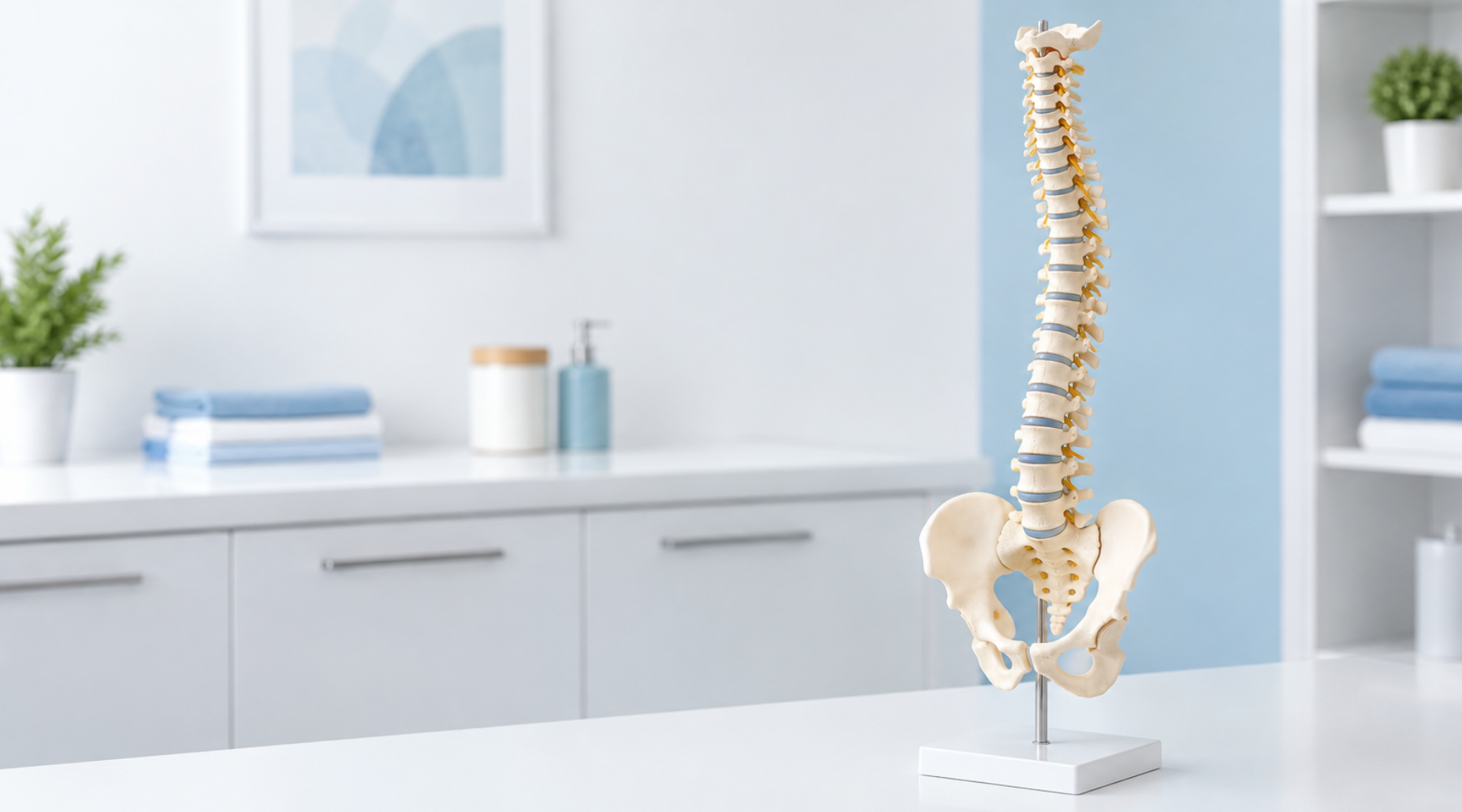
The spinal column, also called the spine, is a jointed structure organized into several regions:
- 7 cervical vertebrae: these form the neck, support the head, and help you turn your head to look in different directions.
- 12 thoracic vertebrae: located in the mid-back, these connect to the ribs and help stabilize the trunk and protect the organs in the chest.
- 5 lumbar vertebrae: large and strong, these support a significant portion of the body’s weight in the lower back.
- The sacrum and coccyx: made up of vertebrae that are fused in adults, these form the base of the spine. The sacrum connects the spine to the pelvis.
Intervertebral discs: shock absorption and load distribution
Intervertebral discs sit between most of the movable vertebrae. There is no disc between the first cervical vertebra, C1 or the atlas, and the second, C2 or the axis. This joint notably allows the head to rotate.
Each disc acts as a fibrocartilaginous cushion. It helps absorb shocks and distribute loads transmitted from one vertebra to another when you walk, run, or lift an object.
How can you improve postural comfort and help prevent back pain?
There is no single sitting or standing posture that suits everyone and guarantees freedom from pain. Rather than trying to stay perfectly upright all day, choose comfortable positions that you can vary according to your activities and tolerance. To explore this topic further, read our article: does the ideal posture really exist?
Vary your positions and move within your abilities
Alternating between positions, taking active breaks, and engaging in physical activity suited to your abilities can support your everyday mobility and comfort. The goal is not to follow a universal schedule, but to find habits that work with your health and symptoms.
- Vary your positions: adjust your sitting position or alternate with standing when it suits you.
- Take breaks: break up long periods in the same position by walking a little or doing gentle movements, as comfortable.
- Adapt your activity: choose movements and an intensity you can tolerate, without pushing through worsening symptoms.
- Notice how you respond: if an activity increases your pain or becomes difficult, modify it and seek advice as needed.
These guidelines may help prevent some discomfort or back pain. They do not replace an assessment when symptoms persist and do not guarantee prevention.
Everyday ergonomics: guidelines for comfort, not absolute rules
Ergonomic adjustments at work or at home can improve your comfort, but they do not guarantee freedom from pain on their own. For example, you can:
- Adjust your screen’s height and position so you can look ahead without straining your neck.
- Keep your elbows close to your torso to reduce sustained tension in your shoulders and upper back.
- Keep your feet firmly supported on the floor or a footrest.
- Plan opportunities to change positions and take breaks based on the task, your comfort, and your tolerance.
Back pain: when should you consult a healthcare professional?
You do not need to wait several weeks before seeking professional advice. An assessment is warranted if you notice:
- Persistent or recurring pain in your neck, mid-back, or lower back.
- Limited movement that interferes with your work, sports, or family activities.
- Recurring muscle tension or pain that radiates to your shoulders, buttocks, or thighs.
Back pain management depends on an individual assessment. This helps determine whether chiropractic care is appropriate or whether a medical assessment or another approach is needed. To learn more, read our article on chiropractic care and back pain.
Warning signs and medical emergencies
Some symptoms require a medical assessment rather than a routine chiropractic visit:
- Immediate medical emergency: sudden problems with bladder or bowel control, urinary retention, or numbness in the perineum and groin area may indicate cauda equina syndrome. Go to the emergency department immediately.
- Muscle weakness: new or rapidly worsening muscle weakness in an arm, hand, leg, or foot requires an urgent medical assessment.
- Prompt medical assessment depending on the circumstances: spinal pain accompanied by an unexplained fever, occurring after significant trauma such as a fall or a road accident, or affecting someone with a history of cancer should be assessed promptly by a physician.
Educational disclaimer: the information in this article is general and does not constitute a medical or chiropractic diagnosis. Chiropractic care does not replace emergency care, a necessary medical assessment, or prescribed treatment.
How do you choose a chiropractor in Gatineau?
When comparing chiropractic care options in Gatineau, rely on concrete criteria rather than promises of results. Here are the points to consider:
- An individual assessment: does the professional take the time to understand your symptoms, health history, activities, and goals before recommending care?
- Clear explanations: would you understand the assessment findings, the proposed options, their limitations, and the planned follow-up?
- Appropriate care: are treatments selected based on your condition and reassessed as you progress, rather than offered in the same way to everyone?
- Medical referral when needed: does the professional explain when a medical consultation or another form of care is necessary?
Chiropractic support
Chiropractic care focuses on the assessment and conservative management of neuromusculoskeletal disorders. It does not aim to cure general or chronic non-mechanical diseases. It can be part of an overall approach to health, alongside appropriate habits and other necessary care.
Located in the heart of the Hull sector, Chiropratique du Portage brings together a father-daughter team with more than 25 years of combined clinical experience. Each patient receives a personalized approach. The suitability of chiropractic care is assessed individually according to the person’s age, condition, and needs.
An initial visit to guide your care
During an initial visit, a detailed health history and a clinical examination help guide decisions. Manual or instrument-assisted chiropractic adjustments, as well as SpineMed spinal decompression, are offered only after a clinical assessment determines their suitability for the individual. Our article on what happens during a chiropractic assessment outlines the steps involved in this visit.
The clinic has on-site digital X-ray equipment available when needed. Care is individualized, with no guarantee of relief, recovery, or a specific recovery time.
Frequently asked questions about spinal health
What makes up the spine?
The spine includes 7 cervical vertebrae in the neck, 12 thoracic vertebrae in the mid-back, and 5 lumbar vertebrae in the lower back. It also includes the sacrum and coccyx, which are made up of vertebrae that are fused in adults.
Are all vertebrae separated by a disc?
No. Intervertebral discs are found between most movable vertebrae, but there is no disc between C1, the atlas, and C2, the axis. Discs help absorb shocks and distribute loads within the spine.
How can you improve your posture at work?
To improve your postural comfort at work, vary your positions, take breaks suited to your needs, and adjust your screen, foot support, and arm position. There is no perfect posture for everyone or required break interval that guarantees freedom from pain.
Can moving more prevent all back pain?
No. Activity suited to your tolerance, changes in position, and ergonomic guidelines may help prevent some back pain, but they do not guarantee you will remain pain-free. Persistent or recurring pain, or pain that limits your activities, warrants a professional assessment.
What criteria should you consider when choosing a chiropractor in Gatineau or Hull?
When choosing a chiropractor in Gatineau or the Hull sector, look for an individual assessment, clear explanations, care with an explained rationale, and medical referral when necessary. Ask how follow-up care will be adapted to your condition and progress.
Which back-related symptoms require urgent medical care?
Sudden problems with bladder or bowel control, urinary retention, or numbness in the perineum and groin area require an immediate visit to the emergency department. New or rapidly progressive muscle weakness also requires an urgent medical assessment.
Does chiropractic care cure general diseases?
No. Chiropractic care focuses on the assessment, diagnosis, and conservative management of neuromusculoskeletal conditions. It does not replace necessary medical care and does not guarantee a cure for back pain.
Caring for your back every day
Caring for your spine relies on habits suited to your needs: varying your positions, moving within your tolerance, adjusting your environment, and seeking advice when pain or limitations persist.
If you are considering a visit, read our tips on preparing for your first chiropractic consultation in Gatineau.
To discuss your symptoms and receive personalized advice, book an appointment with our team.