

You take a pill, wait… and the pain comes back.
For many people, headaches are almost part of everyday life. They’re blamed on stress, fatigue, or a busy day. Yet in many cases, the cause lies elsewhere.
What if your headaches actually come from your neck?
Understanding headaches: more than a simple symptom
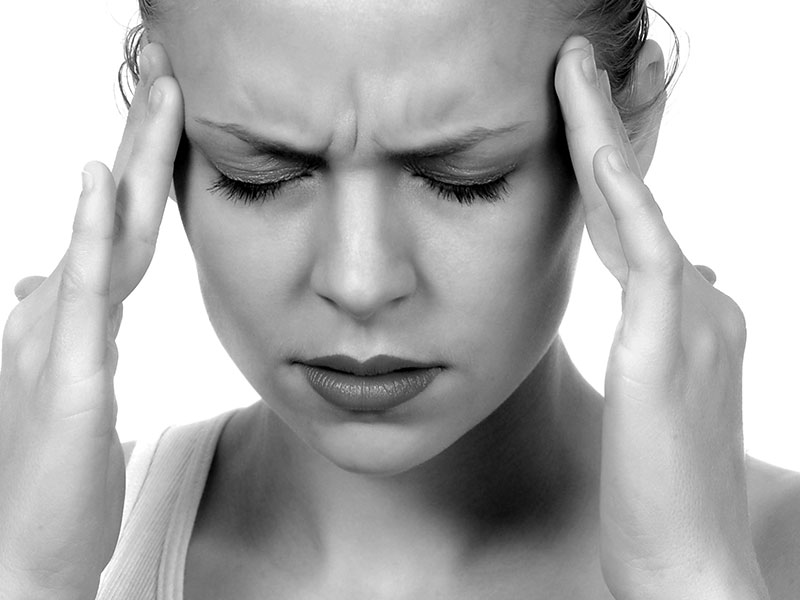
Headaches, also called cephalalgia, can have several origins. Among the most common are tension-type headaches. These account for a large share of cases and are often linked to mechanical and muscular factors.
Unlike migraines, which involve more complex neurological mechanisms, tension-type headaches are generally associated with:
- Muscle tension in the neck and shoulders
- Poor posture held for long periods
- Physical or mental overload
In a work context—whether office work, management, coordination, or physical labor—these factors are particularly prevalent.
The often underestimated role of the neck
The cervical spine plays a central role in the body’s overall balance. It supports the weight of the head, allows wide mobility, and protects essential neural structures. When this region is subjected to repeated strain, it can lead to reduced joint mobility, chronic muscle tension, and irritation of neural structures.
These imbalances do not always show up locally. They can manifest as pain felt elsewhere, notably in the head. Concretely, a forward‑projected head posture—very common when working at a screen—greatly increases pressure on cervical structures. Over time, this overload can trigger or perpetuate persistent headaches.

Signs your neck could be the cause
Some signs, sometimes subtle, may indicate a link between your headaches and your cervical spine. Paying attention to these manifestations often helps better understand the origin of the pain:
- Pain that starts in the neck and travels up to the head
- A feeling of tension or stiffness in the shoulders
- Headaches at the end of the day
- Temporary relief after a massage or rest
- Pain worsened by certain positions
These signals are often downplayed or attributed to stress or fatigue. Yet they frequently reflect the body compensating for an underlying imbalance that, if not addressed, can become chronic.

Daily life: a determining factor
Even with the best care, lifestyle habits play a key role in the onset and persistence of headaches. Repeated strain on the neck and shoulders in daily life often contributes to maintaining cervical tension and tension-type headaches.
Among the most common contributing factors are:
Screen work
Prolonged positions, often with the head tilted forward, greatly increase the load on the neck, which can lead to muscle tension, cervical stiffness, shoulder fatigue, and headaches.
Stress
Stress causes involuntary muscle contraction, which can produce pain especially in the shoulders and cervical region, leading over time to persistent tension, neck stiffness, and end-of-day headaches.

Lack of breaks
Staying in the same position for hours restricts circulation, reduces mobility, and promotes accumulation of tension in the neck and a feeling of heaviness.
Fortunately, simple adjustments can have a significant impact on preventing and managing headaches.
- Optimizing your workstation is a first important step:
- Screen positioned at eye level
- Suitable chair
- Good lumbar support
- Integrate active breaks:
- Stand up every 30 to 60 minutesSe lever toutes les 30 à 60 minutes
- Move, walk, or do brief stretches
- Correct your daily posture to reduce cervical overload:
- Avoid a forward‑projected head
- Keep shoulders relaxed
Finally, gentle targeted stretches for the neck and shoulders, practiced regularly, can help reduce accumulated tension in the upper body and improve daily comfort.
Prevent rather than endure: focus on a sustainable approach
A common mistake when suffering from headaches is waiting until the pain becomes intense or disabling before taking action. Tension-type headaches related to the neck often result from a gradual process. Long before the pain becomes pronounced, the body sends signals in the form of muscle tension, cervical stiffness, or persistent discomfort.
Painkillers can provide quick, temporary relief, but they do not address the underlying cause. When the mechanical origin of the problem is not treated, the body continues to compensate and symptoms tend to reappear, sometimes repeatedly. These compensations can manifest as neck stiffness, chronic muscle tension, shoulder fatigue, and recurrent headaches. Prioritizing a sustainable approach therefore means going beyond temporary relief and addressing the problem at depth.
Adopting a preventive approach to headaches not only reduces episode frequency but also improves daily comfort and maintains a better quality of life. This approach relies on a comprehensive understanding of how the body works, particularly the spine and cervical region.
This is where chiropractic care fits in. Chiropractic aims to optimize musculoskeletal function with special attention to the spine. For neck-related headaches, care may include chiropractic adjustments to improve joint mobility, reduce muscle tension, and promote a better distribution of load along the spine.
The goal is not only to relieve pain but to correct contributing imbalances to support more stable long-term results. Several studies suggest that manual approaches targeting the cervical region can be beneficial for tension-type headaches and some cervicogenic migraines.

Conclusion
Headaches are not always due solely to stress or fatigue. In many cases, the neck and cervical region play a central, often underestimated role in the development of tension-type headaches.
Understanding the link between headaches, posture, and cervical spine function allows you to go beyond mere temporary relief and adopt a more sustainable approach. By paying attention to body signals—such as cervical tension, neck stiffness, or persistent discomfort—it becomes possible to intervene earlier and more effectively.
Listen to your body, recognize these signs, and act at the source: doing so not only helps manage headaches better but also improves daily comfort and supports a better long‑term quality of life.
Dr Émilie Gaudreau, chiropractor
Dr Patrick Gaudreau, chiropractor
Sources consulted April 16, 2026:
Haute Autorité de Santé. (2019). Diagnostic and therapeutic management of chronic headaches in adults. https://www.has-sante.fr
Institut national de santé publique du Québec. (2020). Musculoskeletal disorders and ergonomic risk factors at work.
https://www.inspq.qc.ca
Bryans, R., Descarreaux, M., Duranleau, M., Marcoux, H., Potter, B., Ruegg, R., Shaw, L., Watkin, R., & White, E. (2011). Evidence-based guidelines for the chiropractic treatment of adults with headache. Journal of Manipulative and Physiological Therapeutics, 34(5), 274–289.
https://doi.org/10.1016/j.jmpt.2011.04.008