

With the start of the school year, daily routines accelerate, and children, adolescents, as well as adults spend increasingly more time in front of screens: phones, tablets, laptops. These tools, despite ourselves, are now integrated into our daily lives, whether for studying, work, leisure, communication, or even family management. However, this habit is leading to a growing phenomenon: the text neck.
This postural issue, often responsible for neck pain, cervical stiffness, or chronic tension, deserves our full attention. In this article, discover what text neck is, why it is particularly concerning, and how chiropractic care can play a crucial role in preventing and relieving these pains.

What is Text Neck?
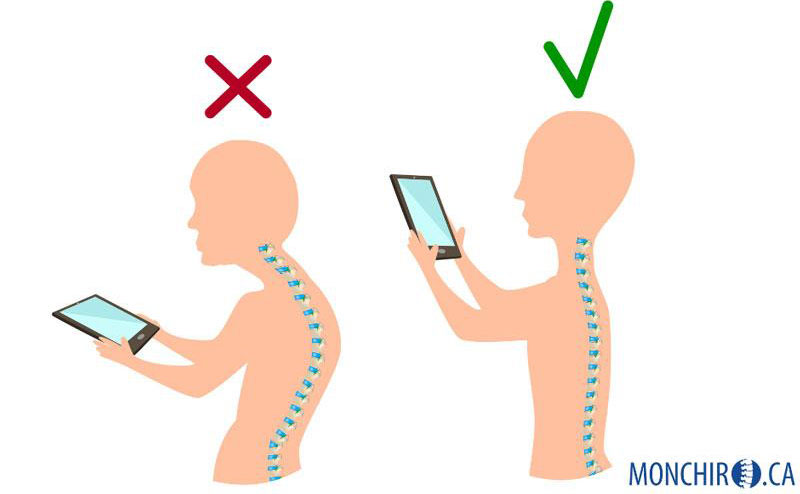
Text neck refers to pain and tension caused by prolonged posture with the head tilted forward, often during the use of electronic devices.
When properly aligned with the spine, an adult’s head weighs on average between 12 and 14 pounds. A 10-year-old child’s head, depending on their growth, can weigh about 7 to 9 pounds. However, when the head is tilted forward at an angle of 30 to 60 degrees to look at a phone, the load on the neck increases significantly. In adults, this pressure can reach up to 60 pounds—equivalent to the weight of a 7-year-old child balanced on your shoulders.
In children, although the head weighs less, the fragility of the cervical spine makes text neck especially concerning, particularly when it is repeated or prolonged.
Why Does Back-to-School Increase the Risk of Text Neck?
The back-to-school period marks the return to a routine where youth spend long hours sitting, often in front of a screen. Whether doing homework on a tablet, attending online classes, or relaxing on social media, children and adolescents adopt postures that excessively strain the neck and back, thereby promoting the development of text neck.

Prolonged use of these devices, combined with sometimes poorly suited furniture, creates an environment conducive to muscle tension and postural imbalances.
At this key time of the year, parents play a vital role in establishing good postural habits within the family routine to prevent discomfort related to text neck. In short, back to school not only brings a heavier backpack but also an invisible burden for the cervical region.
Possible Consequences of Text Neck
When the habit of tilting the head forward becomes routine, it exerts excessive pressure on the neck and shoulders. This overload can lead to:
- Neck pain and upper back discomfort
- Muscle tension and stiffness in the neck, limiting movement
- Recurring headaches
- Progressive deterioration of overall posture
- Lower back pain
- Fatigue and decreased concentration, observed both at school and at work
In the long term, the effects of text neck can develop into chronic pains that are more difficult to treat. That’s why it is essential to correct this posture at the first signs of discomfort.
How to Recognize Text Neck?
Text neck can manifest through several visible signs in children, teenagers, and even adults. One of the first indicators is a head frequently tilted forward when using a phone, tablet, or computer. This prolonged posture can cause neck pain or stiffness, often felt after extended screen time.

Other signs to watch for include the frequent need to “crack” the neck, pain between the shoulder blades, and a rounded posture with shoulders pushed forward. If these symptoms become recurrent, it may indicate that the cervical region is under excessive stress and that preventive intervention is needed.
Practical Tips to Prevent Text Neck
Fortunately, it is possible to reduce the effects of text neck with a few simple adjustments in everyday life. These actions can make a significant difference, especially for youth during the school period.
Here are some practical tips:
- Adjust the Screen Height
Place screens at eye level to avoid tilting the head downward. - Take Frequent Breaks
Every 20 to 30 minutes, look away, move around, and walk a bit. - Strengthen Neck and Core Muscles
A strong core provides better support for the spine and helps prevent lower back and neck pains. - Correct Sitting Posture
Keep your back straight, shoulders relaxed, and feet on the ground. - Encourage Screen-Free Activities
Sports, reading on paper, outdoor games — anything that varies postures and reduces sedentary behavior.
Adopting these habits now not only helps relieve discomfort related to text neck but also prevents long-term chronic pain.
Can You Cure Text Neck?
Good news: yes, it is entirely possible to relieve text neck, especially when addressed quickly and appropriately.
In mild cases, simple postural adjustments, combined with targeted exercises and regular breaks from screen use, can restore comfort and prevent worsening.
In more advanced cases, where pain becomes persistent or limits movement, chiropractic care can be highly beneficial. Through precise adjustments, a chiropractor can reduce tension, improve joint mobility, and prevent the progression toward chronic pain related to text neck. In addition to immediate relief, this approach promotes better long-term posture and sustainable spinal health.
The Role of Chiropractic Care in Text Neck
Chiropractic care plays an essential role in managing text neck, both in adults and in children and adolescents. Proper follow-up helps relieve symptoms and prevent their recurrence.
A suitable care plan may include:
- A postural assessment to identify imbalances and muscle tension.
- Gentle chiropractic adjustments aimed at restoring mobility in the cervical and thoracic vertebrae.
- Personalized exercises to strengthen posture and reduce the risk of chronic pain.
- Ergonomic advice tailored to age and lifestyle: reading positions, backpack use, workstation setup, etc.
Chiropractic care is not limited to simply relieving neck pain caused by text neck. It also emphasizes prevention by helping maintain a healthy spine and balanced posture, especially in growing children and teenagers.
In the digital age, children and adolescents spend increasing amounts of time bent over screens, often in poor postures. This reality is concerning because their spines are still developing. Repeated poor posture can lead to long-term consequences, such as alterations in the natural curvature of the spine.

To prevent these harmful effects, it is crucial to monitor their screen time, teach them the importance of good posture, and encourage movement and stretching habits from a young age. A proactive approach can make a significant difference for their musculoskeletal health in the long run.
Text neck is a real phenomenon affecting more and more young people and adults.
With the back-to-school period and increased screen use, now is the perfect time to care for the posture of the whole family. It is important to adopt good postural habits and remain attentive to signs of back or neck pain. Don’t hesitate to consult your chiropractor for an evaluation and personalized advice on text neck.
Dr Émilie Gaudreau, chiropractor
Dr Patrick Gaudreau, chiropractor
Sources consulted on September 10, 2025 :
Harrison, D. E., & Tonomura, T. (2020). Text neck syndrome: A review of the literature. Journal of Chiropractic Medicine, 19(3), 127–132. https://doi.org/10.1016/j.jcm.2020.02.001
World Health Organization. (2019). Children and the digital environment. https://www.who.int/publications/i/item/9789240012547