
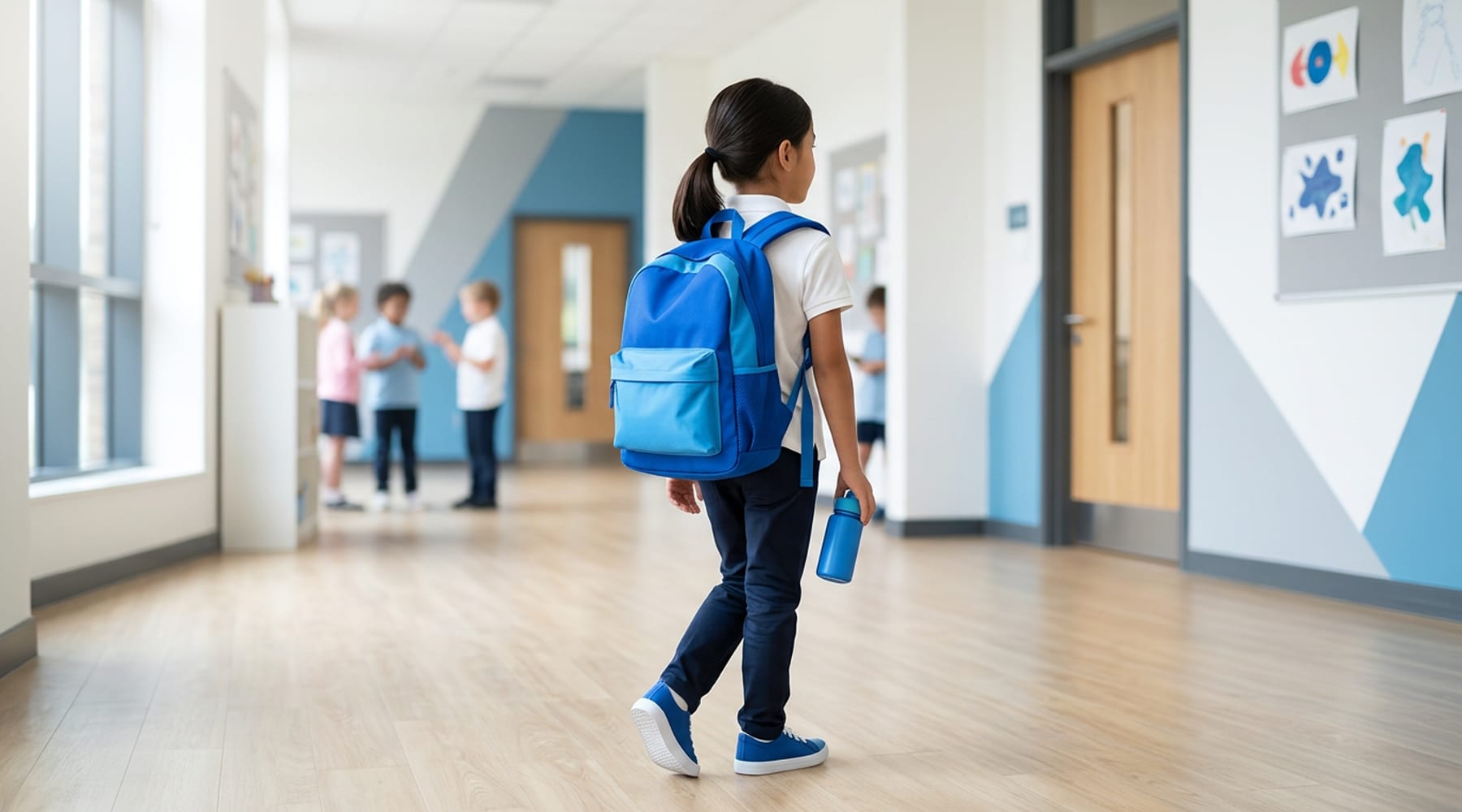
August has arrived in Gatineau, and the excitement of back-to-school season is beginning to build. Now is the ideal time to prepare for the return to the classroom—not only by purchasing school supplies, but also by considering your children’s neuromusculoskeletal health. Good posture and healthy habits established from the outset provide an essential foundation, helping your child focus on learning without being distracted by unnecessary tension.
At Chiro du Portage, we believe a preventive approach helps families better understand the signals the body sends. As a family clinic, we know that heavy backpacks and long hours spent sitting at a desk place significant demands on a growing spine. This article offers practical guidance to help your children enjoy a school year defined by mobility and comfort.
Choosing the Ideal Backpack: Much More Than a Matter of Style
Backpack choices are often driven by trends or a child’s personal tastes, yet this piece of equipment directly affects their everyday posture. The wrong backpack, or one worn incorrectly, can create muscular compensations that become long-term habits.
What to Look for in an Ergonomic Backpack
- Wide, padded shoulder straps: They distribute weight more evenly across the shoulders and prevent the straps from digging into the skin.
- Waist or chest strap: Often overlooked, this feature stabilizes the load against the torso and prevents the backpack from bouncing with every step.
- Proper size: The backpack should never be wider than your child’s torso or hang below the pelvis.
- Multiple compartments: These allow the heaviest items to be placed close to the back, helping keep the centre of gravity near the spine.
Backpack Fit: The Art of Wearing It Properly
Having the right backpack is not enough if it is not adjusted properly. We see far too many children carrying their backpack over one shoulder or wearing the straps much too long, forcing the torso to lean constantly. Make sure your child always uses both shoulder straps. Adjust the backpack so that it rests snugly against the back, with no empty space between its contents and the body.
To help you with this crucial step, we have prepared a simple visual guide: Watch our video to check your child’s backpack fit.
Teach your child this golden rule: once packed, the backpack’s total weight should never exceed 10% to 15% of their body weight. At home, take time to check the contents regularly and remove anything that is not needed that day.
Posture in the Classroom and at Home
Our children spend long hours sitting in a static position. Whether they are seated at rigid desks at school or working at a computer desk at home, the sedentary nature of schoolwork can lead to slouching and neck tension.
Ergonomics for Homework at Home
- Feet flat: Your child’s feet should touch the floor. If that is not possible, use a footrest or small stool.
- Screen height: The top of the screen or book should be at eye level to keep the head from tilting forward.
- Change positions: Encourage your child to take an active break every 30 minutes. Simply standing up to stretch helps maintain circulation and joint mobility.
Frequent tablet and phone use can also affect neck health. For a pain-free return to school, explore our additional tips on text neck and screen time management.
Signs to Watch for in Your Children
Young bodies are constantly adapting, and tension can sometimes develop without obvious symptoms. As a parent, watch for signs that may indicate your child could benefit from a chiropractic consultation:
- Recurring headaches after school.
- Posture that consistently appears slouched or tilted to one side.
- Repeated complaints of muscle fatigue or upper back pain.
- Difficulty remaining seated and focused on reading or writing.
- One shoulder appearing higher than the other.
Chiropractic care does not aim to alter the body’s structure, but rather to ensure that each segment of the spine functions optimally, helping the body better manage postural strain.
Chiropractic Care and Prevention
Neuromusculoskeletal health is an ongoing process. At our clinic, we favour an approach based on active listening and personalized assessment. Our chiropractors can evaluate your child’s posture to identify early asymmetries, allowing us to recommend targeted strengthening exercises or ergonomic adjustments before discomfort becomes limiting.
Remember that you do not necessarily need to wait for acute pain before visiting a chiropractor. Prevention is the best tool available to support healthy development. Our father-daughter team is here to speak with you and your children in a reassuring and transparent environment.
Conclusion: A Balanced Start to the School Year
Returning to school is an exciting milestone that requires preparation. By following a few simple guidelines for backpack use and posture while working, and by remaining attentive to signs of fatigue in your child, you can give them the tools they need to move through the school year with ease.
If you have questions about adjusting your child’s backpack or would like a posture assessment before the school year gets too busy, we invite you to contact Chiro du Portage. We would be pleased to discuss how we can help your family achieve lasting health, naturally and with the clinical precision you deserve.
Dr. Émilie Gaudreau, Chiropractor
Dr. Patrick Gaudreau, Chiropractor