
In the Outaouais, the arrival of the cold comes with a very concrete to-do list: raking leaves, putting away outdoor furniture, closing the pool and getting the winter tires out. Sometimes we’d like to have it all done before the next frost. Yet these tasks can demand unusual effort, especially when they pile up into a single day.
If your back becomes uncomfortable, the cold alone is neither an explanation nor a diagnosis. The loads you handle, repeated movements and how long you work are also part of the picture. Here are some ways to approach these chores while respecting your capabilities.
Before you start: prepare the area and get moving
First, take stock of the tasks to be done. Which ones can wait? Which ones will you need help with? Clear the pathways and keep your tools close by to cut down on unnecessary trips. Footwear suited to the ground and clothing that lets you move freely are also helpful.
Take a few minutes to walk and move gently, then start with a light task. The idea isn’t to follow an exercise routine, but to ease into the activity gradually. If you’re already tired or have a known pain, scale back your goals. There’s no need to finish the whole yard today.
Raking leaves: vary rather than repeat
Raking can become demanding when you keep the same pace and the same movements for a long time. A few adjustments help spread out the effort:
- Switch sides and hand positions as feels comfortable, rather than always pulling from the same side.
- Move your feet to face the leaves, instead of repeatedly twisting your torso with your feet planted.
- Vary your movements by alternating between raking, picking up and a short walk.
- Fill the bags less, especially if the leaves are wet and heavier.
Keep the bag close to where you’re collecting and move it before it becomes hard to handle. Choose a comfortable range of motion: you don’t have to reach far out in front of you for every leaf.
Tidying the yard and closing the pool: break up the effort
Chairs, planters, hoses and pool accessories don’t all present the same difficulty. An object can be awkward even if it isn’t very heavy. Before moving it, check where it’s going and the path to get there, so you don’t end up holding it for a long time while you clear a doorway.
Divide the work into small steps: empty the containers, gather the accessories, then put away one area at a time. When possible, place objects at a comfortable height and distance so you can work without staying bent over or with your arms outstretched for long.
Ask for help with furniture and heavy or bulky objects. For the pool, don’t pull on a heavy cover by yourself, especially when it’s holding water or debris. Arrange to handle it with several people or call on an appropriate service. A task that resists deserves a rethink of the method, not more force.
Winter tires: reduce handling
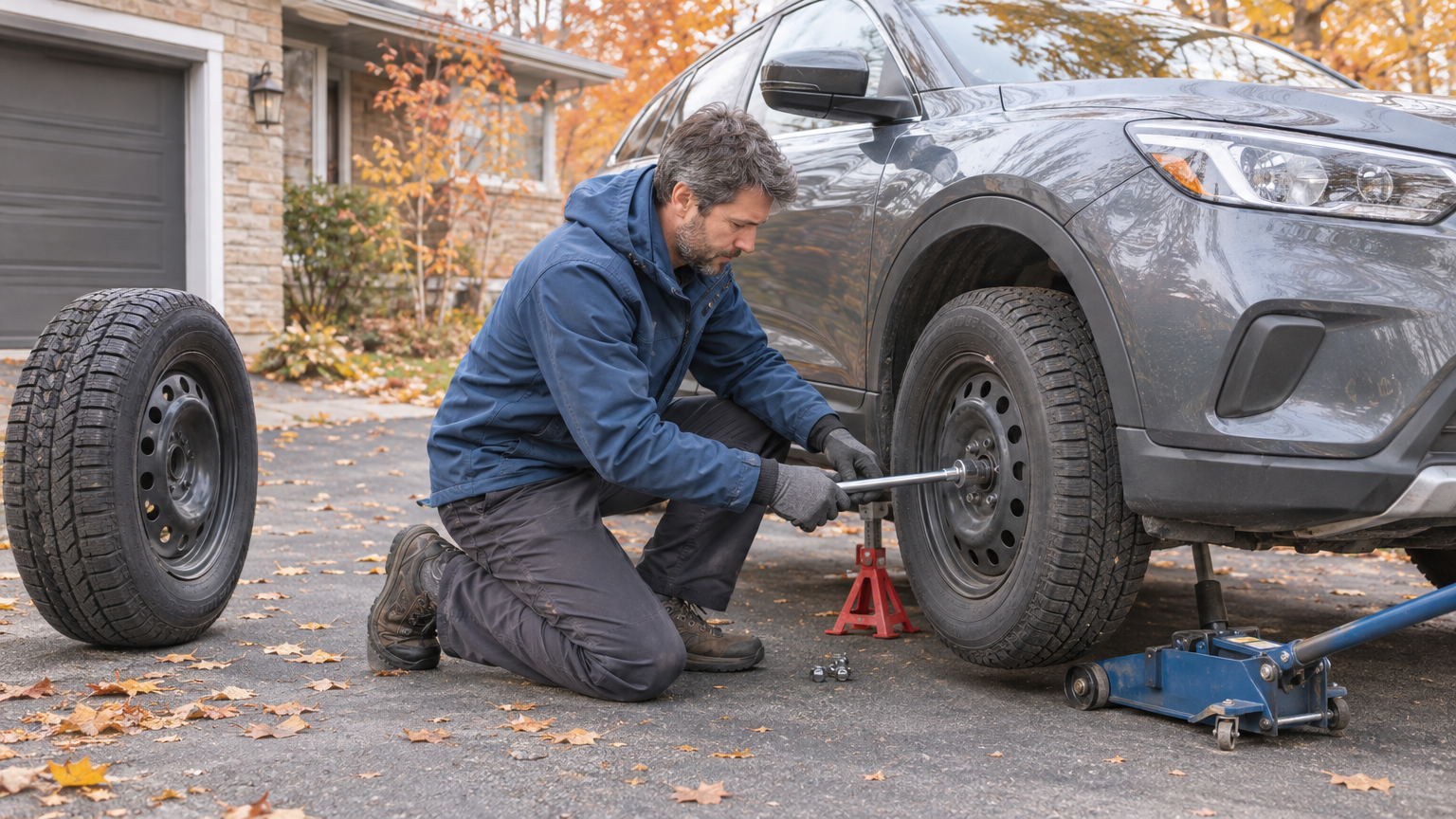
Before taking out the tires, prepare their spot and a clear, stable, non-slippery path. When possible, and as long as you can keep them under control, roll them rather than carry them. Avoid this option on stairs or slopes.
Limit trips by planning the storage in advance. A helper or suitable handling equipment can make moving them easier, particularly for tires mounted on rims. If a load exceeds your capabilities, don’t try to move it alone.
As for installation, leave it to a professional if you don’t have the necessary equipment or experience. Going easy on your back also means recognizing which tasks are better delegated.
Take breaks and adjust your day
Plan breaks before you’re exhausted. Change activities regularly and stop any movement that increases pain. There’s no single posture that protects everyone: varying positions, lightening loads and adjusting how long you work are more flexible guidelines.
When should you get an assessment?
Pain that persists, worsens or limits your activities warrants a professional opinion. Persistent numbness or pain that spreads into a limb should also be assessed. Our article on pain that travels down the leg provides more details.
If you have pain that concerns you, the Chiropratique du Portage clinic can see you for an assessment and tailored advice. Our guide to preparing for a first chiropractic consultation can help you plan your visit.