
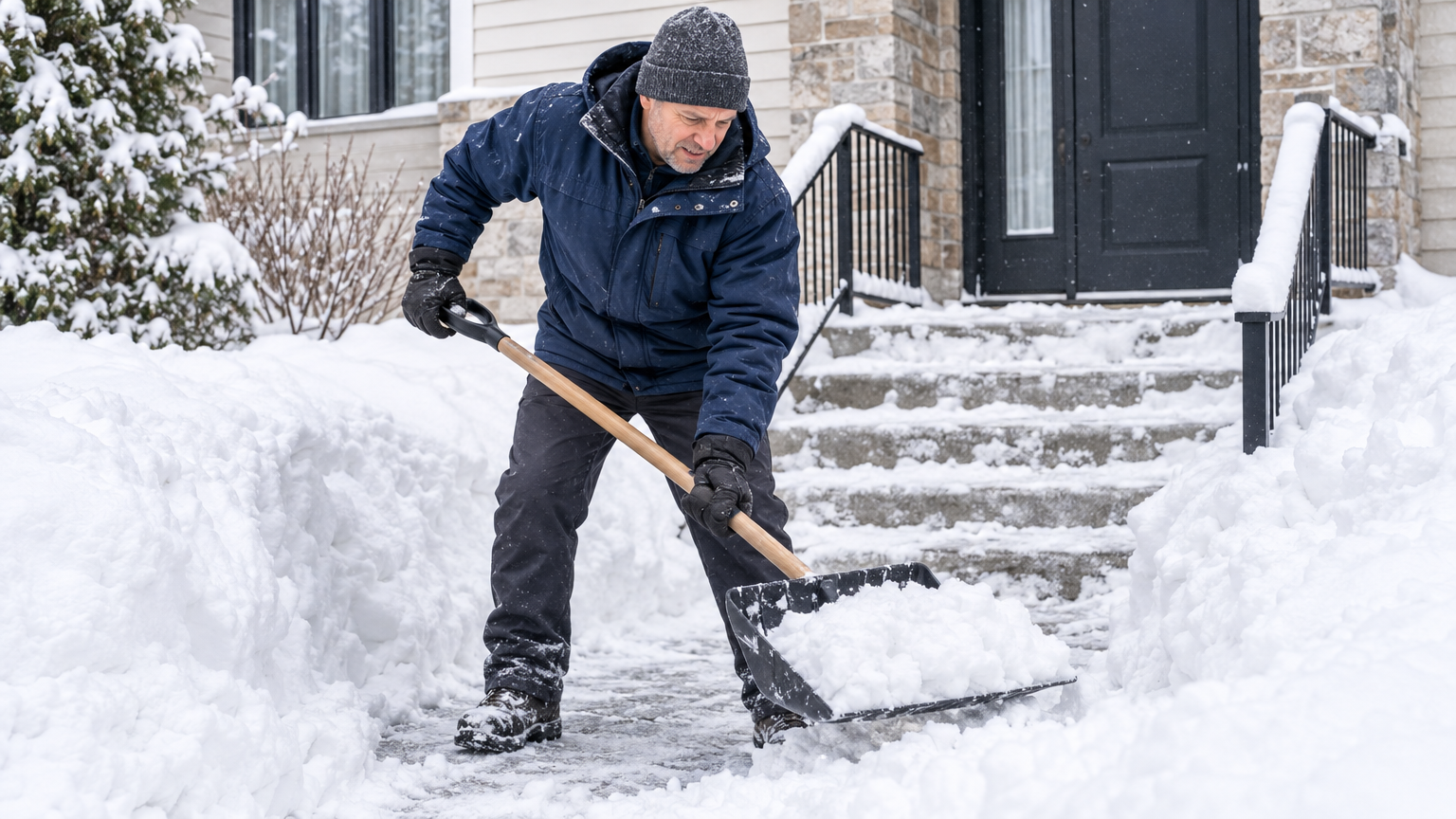
Winter is approaching in the Outaouais, and the shovel is already waiting by the front door. Everything seems ready. Yet one essential question often goes unanswered: who will actually do the shovelling when the snow falls, and who will take over if it gets especially heavy? Before the first snowfall, taking a moment to plan with family or neighbours can save a lot of trouble.
Shovelling is a demanding, full-body physical activity. Rather than focusing on the perfect lifting technique, the key is to make a realistic plan together that takes everyone’s abilities into account.
Assess the actual workload
No two snow-clearing jobs are alike. The effort required varies considerably from one day to the next, depending on several factors:
- The area to clear: Clearing a large double driveway takes a different amount of energy than making a simple path to the mailbox.
- The type and weight of the snow: Powdery snow is easy to push, while wet, waterlogged snow makes each shovelful much heavier and puts more strain on the body.
- Time and pace: Rushing to clear the car before leaving for work puts a different kind of strain on your body than clearing snow calmly at your own pace.
Recognizing these differences helps you adjust your expectations rather than automatically following the same routine.
Consider everyone’s current abilities
Just because someone has always shovelled the family driveway doesn’t mean they should necessarily keep doing it alone. Physical abilities change over the years, as does overall health.
Take the time to have an honest conversation. If you’re noticing lower energy, stiffness or limitations in your daily life, it’s perfectly reasonable to rethink how chores are shared. Respecting your current abilities is an essential part of looking after your health proactively.
Divide up areas, choose the right tools and plan breaks
To make the effort more manageable, planning your tasks is your best tool:
- Divide up the space: One person can take care of the steps and walkway with a broom or small shovel, while another handles the driveway.
- Choose suitable tools: Opt for a lightweight snow pusher to push snow rather than lift it, and a smaller shovel to limit how much you move at once.
- Build in breaks: Don’t wait until you’re exhausted to stop for a moment, drink some water and catch your breath.
- Arrange backup: Have a clear agreement about who will take over if the task becomes too demanding or fatigue sets in.
Arrange practical help before the storm
When the job is beyond the abilities of those living in the home, getting outside help is an excellent option. Check whether a neighbour, a loved one or a local teenager is available to lend a hand. Confirm the arrangements in advance so everyone knows what to expect.
Hiring a snow removal service for the driveway is another safe option that can lighten your load. Delegating large areas leaves you with only essential access points, such as the steps, keeping the effort at a manageable level.
Medical considerations and warning signs
Snow removal puts considerable strain on the cardiovascular system. If you have a history of heart disease or risk factors, talk to your doctor about whether this activity is appropriate for you, and plan to have someone else do the work when necessary. Warming up is never a substitute for medical clearance and does not make an unsuitable activity safe.
Listen to your body while you’re working. Chest pain, feeling seriously unwell or unusual shortness of breath mean you must stop immediately and get urgent medical help. If you suspect an emergency, call 911 immediately.
Your mini snow removal plan
Take a few minutes to fill out this short checklist before the season begins:
- Essential area: Which access points need to be cleared first?
- Available person and suitable workload: Who will handle this area based on their current abilities?
- Confirmed backup: Who will step in if the job takes too long or becomes too demanding?
- Alternative solution: Which neighbour, loved one or service can you turn to if the snow is too heavy?
Plan together for a worry-free winter
Having this conversation as a family before the ground turns white means you won’t have to make rushed decisions in the middle of a storm. By clarifying roles and confirming backup in advance, you protect your well-being and that of your loved ones.
If musculoskeletal pain persists or limits your daily activities, a personalized chiropractic assessment can help you take stock of your mobility.
Public source: University of Ottawa Heart Institute, “ Snow shovelling: Life-saving advice for heart patients ”, January 14, 2026.